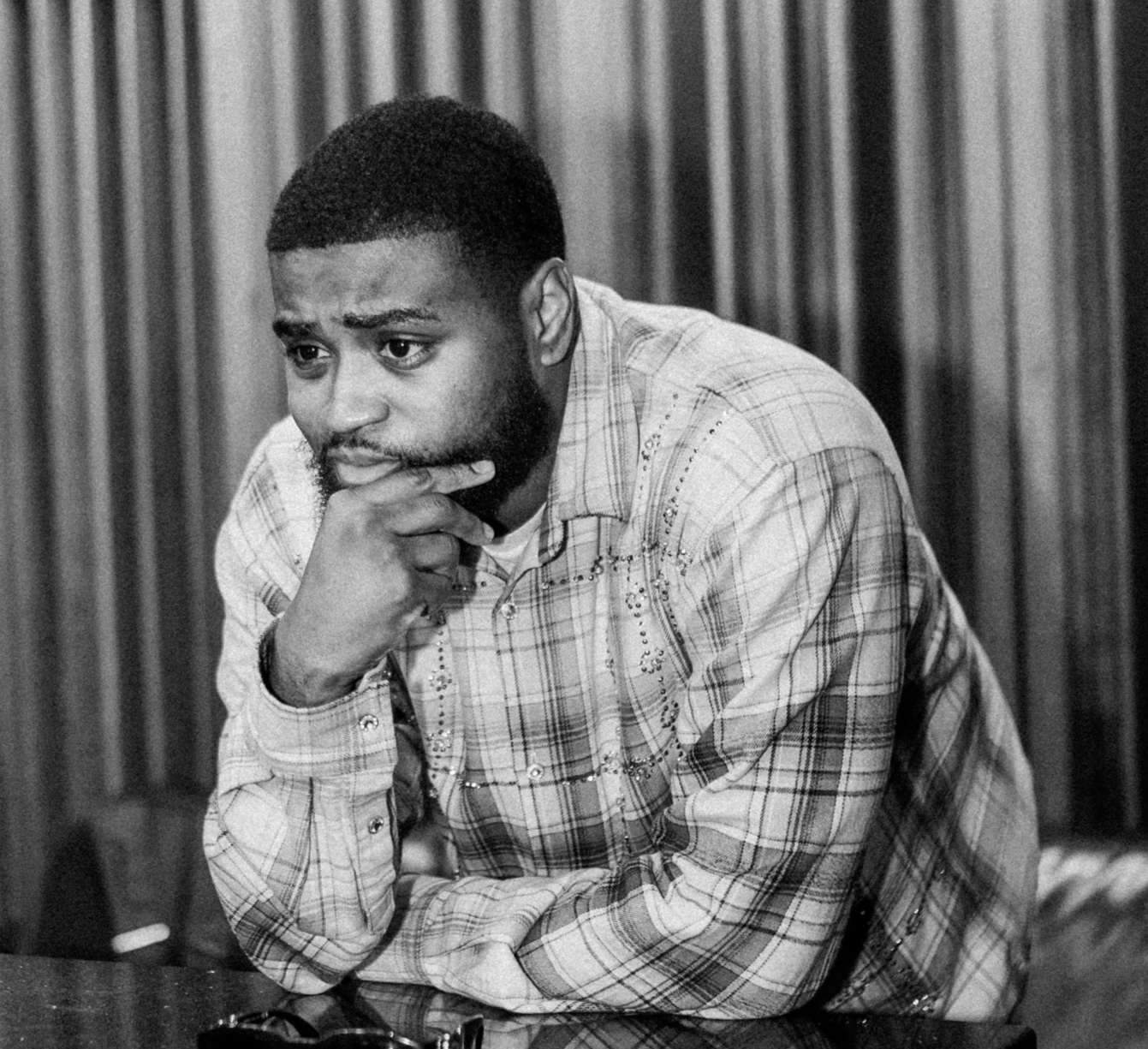
community is everything. having people around to see what you’re doing and not only want to see you succeed but also want to help, that’s not something that can be measured. sometimes it takes a reminder from your homies to see how far you’ve come. when you’re on a mission, you rarely take the time to run down some of your accomplishments. blue is one of my favorite people to tap in with. we don’t speak every day, but when we do, it feels like the first day we linked. i met him when i was 18-19 years old. he’s seen me bring my son into this world, i’ve seen him get married and have his daughter, funerals, tv appearances, major shows, movie placements, birthdays together, everything under the sun actually. it means a lot to me to be able to have someone in your life that you’ve watched step by step and vice versa.
you ever meet someone who was locked up before and three words in after you are introduced, they tell you they were locked up? that’s blue. and him being from seattle, homie has been here for 24 years and still says seattle every chance he gets. i didn’t realize he was a dj back in the day, which explains a lot about how he critiques music and what he listens for. starting my career with me early, i never asked him how he knew exactly what to do on certain songs until later, when i found out he went to nyu for it. as much as he’s been a great asset to me as an engineer, when i would work with other engineers, i’d be pissed because they didn’t work as efficiently as blue.

as much as blue has helped me perfect my craft and watched me elevate, i’ve witnessed blue’s career completely take off. knowing how much he loves music and how much he cares about the sound being perfect and adding his own elements to the music has made him a household name. i like bragging about my homies, so it feels great to be able to walk into rooms, mention blue, and have people know him for his work. he also brought home a grammy. even though i’ve seen it at least 20 times before, i still like to remind him how dope it is to have that.
blue brought something to my attention, which was having a trifecta to create some of the great projects we worked on earlier in my career. having someone like him and ibe in my corner made it easier to craft those projects and ideally created a formula that has continuously worked overtime. having a producer to be creative, an engineer with the skill and insight to take a record to the next level, and an artist who is dedicated as well as moldable to work with has always proven to be successful. that goes back to my thoughts on community. it’s super important to have people around you who can see where you’re trying to go, even if you don’t, and contribute to the journey. and it goes both ways. i would like to believe that all the time blue spent perfecting my sound carried over into the projects he later worked on as well.
i like being a student of the game. always learning and taking in information that can help me get better as an artist and as a man. blue does the same thing. we played records he mixed and mastered and talked about all the artists he’s worked with. what stood out wasn’t him chasing clout or notoriety. it was the fact that he looked at each artist as separate and tried to bring the best out of each vocal while staying true to who they are. the only way you can really do that is by being a student of the game and paying attention to what they’ve already done and finding ways to enhance it.

i’m just realizing that’s what he does even when he’s not being an engineer. he’s always enhancing the people around him. you can’t have a conversation with him without him wanting to step in and help.
the love of music definitely brought us together. the life we live around it made us family.